
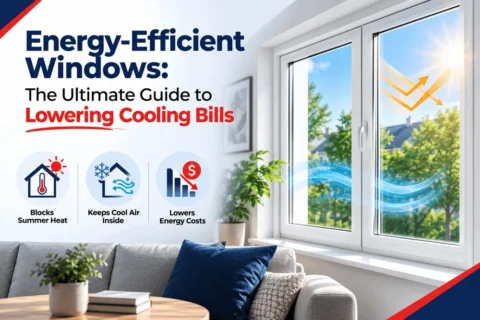
Every summer, Ontario homeowners watch their hydro bills climb and assume the problem is the AC unit. The truth is, your windows might be doing more damage than your HVAC ever could. Old, single-pane, or poorly sealed windows let outdoor heat pour in while your cooled indoor air quietly escapes, forcing your air conditioner to work twice as hard just to keep up.
The good news is that upgrading to energy-efficient windows is one of the most effective home improvements for long-term comfort and lower energy costs. In this guide, you’ll learn what makes a window truly energy efficient, which features to look for, how to spot problem windows in your home, and when it makes sense to repair versus replace. We’ll also share some practical tips that go beyond window replacement to help you get through summer without dreading your next electricity bill.
Can Energy-Efficient Windows Really Reduce Cooling Bills?
Yes. Energy-efficient windows reduce cooling costs by blocking solar heat gain, sealing air leaks, and reducing the workload on your air conditioner. In Ontario’s hot summers, upgrading from single-pane to double-pane Low-E windows can meaningfully lower indoor temperatures and cut energy use. Actual savings depend on your home’s size, current windows, and installation quality.
Why Are Your Cooling Bills So High During Summer?
Most homeowners blame high summer bills entirely on how often the AC runs. But the real question is why it runs so often. In many GTA homes, especially those with older windows, the answer comes down to heat transfer happening in places you can’t easily see.
Common Reasons Your Home Loses the Battle Against Summer Heat
- Single-pane glass heats up quickly in direct sunlight and radiates that heat directly into your living space
- Air leaks around window frames let warm outdoor air seep in and cool indoor air escape constantly
- Old or warped window frames made from aluminum or wood contract and expand over seasons, creating gaps that standard weatherstripping can’t fully seal
- No Low-E coating means your windows absorb and pass through solar radiation without filtering it
- Missing or degraded window seals in older double-pane units allow the insulating gas fill to escape, reducing their effectiveness
What Are Energy-Efficient Windows?
Energy-efficient windows are designed specifically to reduce heat transfer between the inside and outside of your home. Unlike standard windows that are built mainly for visibility and basic weather protection, these windows use advanced materials and construction techniques to control how much heat, cold, and UV radiation passes through the glass.
They’re not just a product upgrade. They’re a system, and every component plays a role in overall performance.
Main Components That Make a Window Energy Efficient
Low-E Coating: Low-emissivity (Low-E) glass has an ultra-thin metallic coating applied to the surface. This coating reflects infrared heat while still letting natural light pass through. In summer, it keeps solar heat outside. In winter, it reflects interior warmth back into the room. It’s one of the most impactful upgrades you can make to any glass unit. Tanic Glass offers Low-E glass as a core product for residential and commercial applications.
Double or Triple Glazing: Double-pane windows use two layers of glass with a sealed space between them. Triple-pane adds a third layer. That air (or gas) gap is what slows heat transfer significantly compared to a single sheet of glass. In Ontario’s climate, double-pane is the standard minimum for energy performance, and triple-pane is worth considering for exposed or west-facing windows.
Gas Fills: The space between glass panes in a quality thermal unit is filled with argon or krypton gas rather than plain air. These gases are denser than air, which slows thermal conductivity and improves the window’s overall insulation rating. Argon gas is the most common fill used in residential energy-efficient windows across Canada.
Insulated Frames: The glass isn’t the only place heat escapes. Frames matter too. Vinyl and fiberglass frames have much lower thermal conductivity than aluminum, which means they don’t act as a heat bridge the way older metal frames do.
Warm Edge Spacers: These are the strips that separate the two panes of glass around the perimeter of the unit. Standard aluminum spacers conduct heat easily. Warm edge spacers use materials like foam or silicone composite to reduce heat transfer at the edges, where most conduction happens in a double-pane unit.
How Energy-Efficient Windows Help Lower Cooling Costs
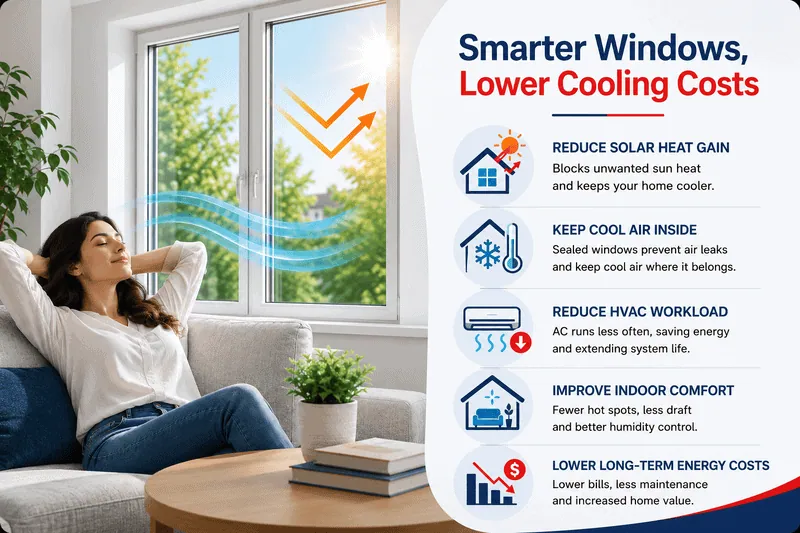
This is where the technical features translate into real results for Ontario homeowners. Let’s break it down by what actually changes in your home.
Reduce Solar Heat Gain
Solar heat gain is the amount of heat that enters your home through glass due to sunlight. On a hot July afternoon, a south-facing window without Low-E coating can push indoor temperatures up noticeably, even with the blinds closed. Low-E coated, double-pane windows can reflect a significant portion of that solar energy before it enters your home, reducing the need for your AC to compensate.
Keep Cool Air Inside
Air conditioning cools the air in your home. But if that cooled air is constantly escaping through gaps around old window frames or through the glass itself, your AC never really catches up. Energy-efficient windows with proper seals and insulated frames create a tighter building envelope, which means the cool air you’re paying to produce actually stays where it belongs.
Reduce HVAC Workload
When your home holds temperature better, your air conditioner runs in shorter, more efficient cycles rather than running almost continuously. This directly reduces electricity consumption and also extends the life of your HVAC system by reducing the wear caused by constant operation.
Improve Indoor Comfort
Cooling bill savings are measurable, but comfort is what you notice day to day. Energy-efficient windows eliminate hot spots near windows, reduce drafts, and even help with humidity control by reducing condensation on glass. Rooms that used to feel stuffy or overheated in summer become genuinely comfortable spaces again.
Lower Long-Term Energy Costs
Practical example: Say you have an older semi-detached home in Scarborough with single-pane windows on the south and west sides. Your AC runs most of the day from June through August. After replacing those windows with double-pane, Low-E units with argon gas fill and proper installation, your AC cycles reduce because less heat is entering through the glass. The upfront cost of replacement is offset over time through lower monthly hydro bills, less HVAC maintenance, and improved home value.
Signs Your Current Windows Are Wasting Energy
Not sure if your windows are the problem? Here’s a practical checklist to help you evaluate what you’re working with.
- Rooms heat up fast even when the AC is running, especially in south or west-facing areas
- Your AC runs almost non-stop during afternoon hours in summer
- You can feel warmth radiating off the glass when standing near windows on a sunny day
- Drafts near window frames even when the window is fully closed
- Unusually high hydro bills that don’t match your usage habits
- Condensation between the glass panes on double-pane windows (a sign the seal has failed and the gas fill has escaped)
- Furniture or flooring fading near windows due to UV exposure passing through uncoated glass
- Windows that are difficult to open, close, or seal properly due to warped or degraded frames
If you’re checking more than three or four boxes, your windows are almost certainly contributing to your energy costs.
Best Types of Energy-Efficient Windows for Canadian Homes
There’s no single window type that works best for every home. The right choice depends on your budget, the orientation of your windows, and how cold or hot the affected rooms get.
| Window Type | Best For | Energy Efficiency | Cost | Maintenance |
| Double-Pane (Low-E) | Most Ontario homes | Good to Very Good | Moderate | Low |
| Triple-Pane | North-facing or exposed windows | Excellent | Higher | Low |
| Low-E Coated Glass | Heat control + UV blocking | Very Good | Moderate | Low |
| Vinyl Framed | Budget-conscious upgrades | Good | Low to Moderate | Very Low |
| Fiberglass Framed | Premium performance + durability | Excellent | Higher | Low |
Quick notes:
- Double-pane is the practical standard for GTA homes and handles most seasonal conditions well
- Triple-pane is worth the extra investment for rooms with lots of glass exposure or extreme temperature swings
- Vinyl frames are low-maintenance and thermally better than aluminum for most residential applications
- Fiberglass holds up longer in temperature extremes and doesn’t expand or contract as much as vinyl
Features to Look for Before Buying Energy-Efficient Windows
Before you commit to any window purchase, these are the specifications and certifications that actually matter for performance in Ontario’s climate.
ENERGY STAR Certification
Look for windows carrying the ENERGY STAR label certified for Canada’s climate zones. Natural Resources Canada recommends ENERGY STAR as a reliable baseline for energy performance, and windows certified for zone 2 or zone 3 are suited to Ontario’s heating and cooling demands.
U-Factor
The U-factor measures how well a window prevents heat from escaping. The lower the number, the better the insulation. For Ontario, look for a U-factor of 1.22 W/m²K or lower. A higher U-factor means more heat transfer, which works against you in both summer and winter.
Solar Heat Gain Coefficient (SHGC)
SHGC measures how much solar radiation passes through the glass. Values range from 0 to 1. For summer cooling in Ontario, a lower SHGC (around 0.25 to 0.40) is generally better because it means less solar heat enters your home. However, if you want passive solar warming in winter, a slightly higher SHGC may be preferable for south-facing windows.
Low-E Glass
As covered earlier, Low-E coating is a standard feature worth prioritizing. It handles both solar heat gain in summer and heat retention in winter, which makes it suitable for Ontario’s full seasonal range.
Frame Material
Vinyl and fiberglass are the two best options for energy efficiency and low maintenance. Aluminum frames, while durable, are thermal conductors and are generally not recommended for energy-efficient residential installations without a thermal break.
Professional Installation
A technically strong window installed poorly will still underperform. Air gaps, improper flashing, or inadequate sealing around the frame will eliminate much of the energy benefit the window was designed to deliver. Natural Resources Canada notes that installation quality directly affects window performance, which is why working with an experienced glazing professional matters as much as product selection.
Should You Repair or Replace Your Windows?
Not every window situation calls for full replacement. Sometimes targeted repairs can restore performance at a fraction of the cost.
| Situation | Repair | Replace |
| Condensation between panes | Seal failure, IGU replacement possible | Full replacement if frame is damaged |
| Drafts around frame | Weatherstripping or caulking fix | Replace if frame is warped or rotted |
| Single-pane glass | Add window film for minor improvement | Replace for real performance gains |
| Cracked or broken glass | Repair if frame is sound | Replace unit if damage is extensive |
| Windows over 20 years old | Repairs extend life short-term | Replacement is usually better ROI |
| Foggy or failed seals | IGU replacement often solves it | Replace if recurring or widespread |
For many homeowners, starting with a professional assessment makes more sense than assuming full replacement is necessary. Tanic Glass handles both window glass repair and full window replacement, so an inspection can give you an honest picture of what your windows actually need. If you’re dealing specifically with failed seals or foggy windows, that’s often something that can be addressed without replacing the entire window unit.
Extra Tips to Reduce Cooling Bills Besides Window Replacement
Window replacement is one of the most effective long-term solutions, but it’s not the only lever you can pull. If you’re not ready for full replacement or want to maximize the results of new windows, these additional steps can make a real difference.
- Weatherstripping and caulking around existing window frames seals small gaps that allow conditioned air to escape
- Window films can reduce solar heat gain on existing single-pane or older double-pane glass without full replacement
- Cellular shades or thermal curtains add an extra layer of insulation, especially on west-facing windows that take afternoon sun
- Smart thermostat allows your HVAC to run more efficient cycles and avoid overcooling during peak heat hours
- Ceiling fans in counterclockwise mode during summer help circulate cool air without increasing AC run time
- HVAC maintenance including regular filter changes and annual service keeps your system running at rated efficiency
- Seal attic and wall penetrations because air leaks rarely happen only at windows
These steps work well alongside new windows or as a bridge solution while you plan a larger upgrade.