
Your front window does more than let in light. It’s often the first thing visitors notice about your home, it plays a real role in keeping your heating and cooling bills in check, and in older houses, it’s usually the weakest point for drafts and moisture. So it’s no surprise that “how much to replace front window” is one of the most common questions Canadian homeowners search for before starting a renovation.
Front windows get replaced for a handful of practical reasons: a cracked pane, fogging between the glass layers, a warped frame that won’t close properly, or simply a desire to modernize the look of the house before selling. Whatever the reason, the price tag isn’t a single fixed number — it depends on the size of the window, the type of glass you choose, the condition of the existing frame, and how complicated the installation turns out to be.
In this guide, we’ll walk through realistic cost ranges for Canadian homeowners in 2026, the factors that push prices up or down, how to decide between a glass-only repair and a full replacement, and what to expect from the installation process itself. We’ll also cover related projects homeowners often bundle together, like changing glass in a front door or replacing sliding glass doors, so you can plan your budget with a clearer picture of the whole project.
What Is the Average Cost to Replace a Front Window in Canada?
Typical Front Window Replacement Cost Range
Most Canadian homeowners pay somewhere between $500 and $2,500 installed for a single front window, with the majority of standard-sized vinyl or double-pane replacements landing in the $600 to $1,500 range. A basic retrofit into an existing, well-maintained opening can come in closer to $500, while a large picture window, a custom shape, or a premium triple-pane unit can easily climb past $2,500 to $4,000.
Front windows tend to sit at the higher end of the per-window cost spectrum compared to smaller bedroom or bathroom windows, simply because they’re often larger, more visible, and more likely to be a picture, bay, or bow style rather than a standard slider.
Average Cost by Window Type
| Window Type | Estimated Installed Cost (CAD) |
| Single-hung | $400 – $800 |
| Double-hung | $450 – $900 |
| Casement | $550 – $1,100 |
| Sliding | $450 – $850 |
| Picture (fixed) | $600 – $1,800 |
| Bay | $2,500 – $5,000+ |
| Bow | $3,000 – $6,000+ |
| Custom-shaped | $1,200 – $4,000+ |
Average Cost by Glass Type
| Glass Type | Typical Price Impact |
| Single-pane | Lowest cost, rarely used in new installs |
| Double-pane | Standard baseline pricing |
| Triple-pane | Adds roughly 15–20% over double-pane |
| Tempered glass | Adds a moderate premium for safety code compliance |
| Laminated glass | Higher cost, added for noise and security benefits |
| Low-E glass | Small added cost, often bundled into standard quotes |
Front windows facing the street or a sunny exposure often benefit from Low-E glass coatings, which reflect heat back into the home in winter and block excess UV in summer without noticeably changing the price.
Featured Snippet Answer — What is the average cost to replace a front window in Canada? The average cost to replace a front window in Canada in 2026 is between $600 and $1,500 installed, though prices can range from $400 for a small basic retrofit to $4,000 or more for large, custom, or premium triple-pane windows.
Factors That Affect Front Window Replacement Costs
Window Size and Dimensions
Larger front windows require more glass, a heavier frame, and often two installers instead of one. A standard 24×48-inch window will always cost less than an oversized picture window spanning several feet.
Type of Glass Selected
Double-pane glass remains the most common choice for Canadian homes, but triple-pane, Low-E coatings, and argon or krypton gas fills all add incremental cost in exchange for better insulation and noise reduction.
Window Frame Material
- Vinyl – most affordable, low maintenance
- Wood – higher cost, classic appearance, more upkeep
- Aluminum – budget-friendly but less energy efficient
- Fiberglass – premium pricing, excellent durability
- Composite – mid-to-high pricing, blends performance and style
Energy-Efficient Features
ENERGY STAR-certified windows, argon gas fills, and Low-E glazing typically add a modest premium upfront but can reduce heating and cooling costs meaningfully over the window’s lifespan.
Installation Complexity
A straightforward retrofit into a sound, standard-sized opening is the cheapest scenario. Full-frame replacement — removing everything down to the studs — costs more but is often necessary in older homes.
Accessibility and Labour Requirements
Second-storey installs, tight urban lots, or windows surrounded by masonry or brick generally require more labour time, which adds to the final quote.
Regional Pricing Differences Across Canada
Labour rates vary meaningfully by city and province, with larger urban centres like Toronto and Vancouver typically running higher than smaller markets.
Disposal and Cleanup Costs
Most reputable installers include removal of the old window and basic debris cleanup in their quote, but it’s worth confirming this is included rather than billed separately.
Pricing Factors Summary Table
| Factor | Effect on Cost |
| Window size | Larger = higher cost |
| Glass type | Triple-pane and specialty glass = higher cost |
| Frame material | Fiberglass and wood = higher cost; vinyl = lower cost |
| Installation type | Full-frame = higher cost than retrofit |
| Accessibility | Harder access = higher labour cost |
| Region | Urban centres generally cost more |
| Energy features | Adds moderate premium, often offset by rebates |
Front Window Glass Replacement vs Full Window Replacement
When Glass-Only Replacement Is Enough
If the frame is structurally sound, isn’t rotting or warped, and the only issue is a cracked pane or a fogged seal between panes, replacing just the glass unit is usually sufficient. This is a common fix for windows that are otherwise in good shape. If you’re weighing this option for a door rather than a window, the logic is similar — see our note below on changing glass in a front door.
When Full Window Replacement Is Necessary
Full replacement becomes the better path when the frame is warped, rotting, letting in persistent drafts, or when the window no longer opens and closes properly. If the surrounding structure has water damage, glass-only repair will only mask a bigger problem.
Cost Comparison Between Both Options
| Option | Typical Cost Range | Best For |
| Glass-only replacement | $200 – $600 | Sound frame, cracked or fogged glass |
| Full window replacement | $500 – $2,500+ | Damaged frame, drafts, aging window |
Which Option Provides Better Long-Term Value?
Glass-only replacement is cheaper upfront but doesn’t address frame-level issues. Full replacement costs more initially but typically offers better energy performance, a longer lifespan, and stronger resale value, especially if the existing frame is more than 20 years old.
Signs Your Front Window Needs Replacement
- Cracked or broken glass — an immediate safety and security concern
- Condensation between panes — usually means the seal has failed and the insulating gas has escaped
- Drafts and air leaks — noticeable cold spots near the window, even with it closed
- Water damage around the frame — soft wood, peeling paint, or staining on the wall below the sill
- Difficulty opening or closing — often a sign of a warped or swollen frame
- Rotting or damaged frames — particularly common in older wood-framed homes
- Rising energy bills — a poorly sealed window can be a hidden contributor to higher heating and cooling costs
Repair or Replace? How to Make the Right Decision
Situations Where Repairs Make Sense
Minor cracks, a single foggy pane, or a stuck sash on an otherwise healthy frame are usually worth repairing rather than replacing outright.
Situations Where Replacement Is the Better Investment
If the window is more than 20–25 years old, has recurring drafts, or the frame shows structural damage, replacement is generally the more cost-effective long-term choice — repeated repairs on an aging window often add up to more than a single replacement.
Long-Term Cost Considerations
Factor in not just the upfront price, but ongoing energy costs, maintenance frequency, and how many more years the current window realistically has left.
Quick Decision-Making Checklist
- Is the frame structurally sound with no rot or warping?
- Is the damage limited to the glass only?
- Is the window less than 15 years old?
- Are energy bills stable, with no noticeable drafts?
If you checked most of these boxes, a repair may be enough. If not, replacement is likely the smarter move.
Front Window Replacement Costs by Frame Material
Vinyl Windows
The most budget-friendly and widely used option in Canada, with low maintenance requirements and solid energy performance.
Wood Windows
Offers a classic, traditional look, particularly popular for heritage-style homes, but comes with a higher price tag and more upkeep.
Aluminum Windows
Durable and slim-profile, but generally less energy efficient than vinyl or fiberglass unless thermally broken.
Fiberglass Windows
A premium option known for strength, stability across temperature swings, and a long lifespan.
Composite Windows
Blends materials to balance performance, appearance, and cost, sitting in the mid-to-upper price range.
Pros and Cons Comparison Table
| Material | Pros | Cons | Relative Cost |
| Vinyl | Affordable, low maintenance, energy efficient | Limited colour customization | $ |
| Wood | Classic look, good insulation | Requires regular upkeep | $$$ |
| Aluminum | Slim frames, durable | Lower insulation unless thermally broken | $$ |
| Fiberglass | Very durable, long lifespan | Higher upfront cost | $$$$ |
| Composite | Strong performance-to-cost balance | Fewer style options than wood | $$$ |
Front Window Replacement Costs by Home Type
Detached Homes
Typically have larger front windows and more flexibility in styles, which can push costs toward the higher end, especially for picture or bay windows.
Semi-Detached Homes
Often use standard-sized windows, keeping costs closer to the average range.
Townhouses
Front windows are usually modest in size, with straightforward installation in most cases.
Condominiums
May involve building-specific rules, shared property considerations, or restrictions on frame colour and style, which can affect both cost and timeline.
Older and Heritage Homes
Non-standard window openings, masonry surrounds, and outdated framing often mean full-frame replacement rather than a simple retrofit, which increases the overall cost.
Related Glass Replacement Projects Homeowners Commonly Consider
Changing Glass in Front Door
Front door glass often needs replacing due to cracks, fogging in an insulated glass unit, or storm damage. Cost depends on the size of the glass panel, whether it’s a decorative or sidelight insert, and whether it must meet safety glazing requirements. In most municipalities, glass installed in or near an entry door must be tempered or laminated safety glass.
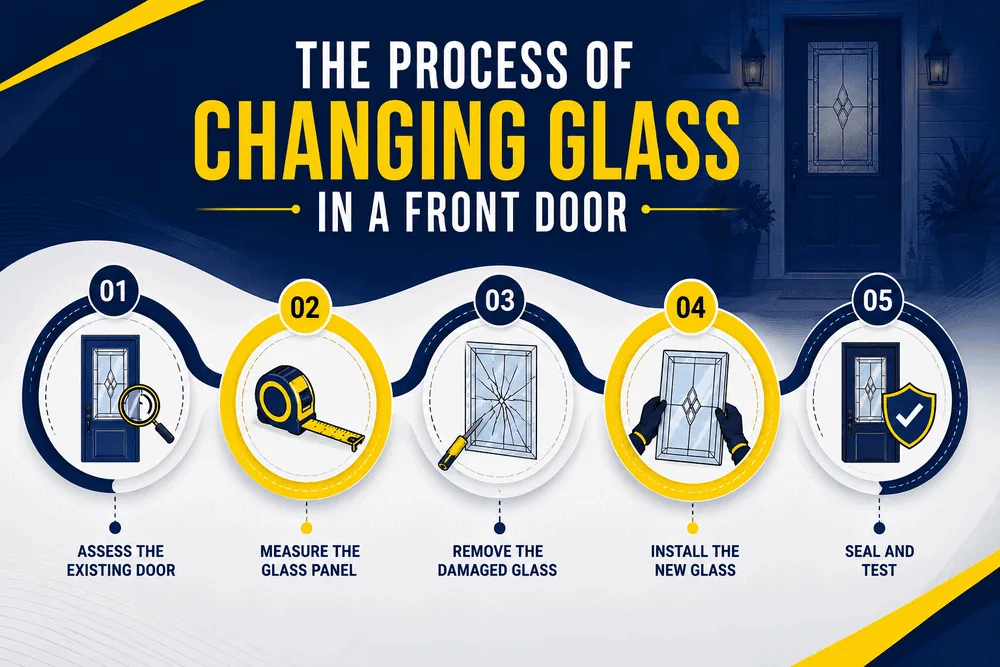
How to Change Glass in Front Door
The general process involves removing the interior stop moulding, carefully lifting out the damaged glass unit, measuring the opening precisely, and fitting the new pane before resealing it in place. Because entry doors are a security point for the home, and because safety glass codes apply, professional installation is strongly recommended over a DIY attempt — our window glass repair team handles this type of job regularly.
Changing Sliding Glass Doors
Sliding glass doors commonly develop issues with foggy seals, worn rollers, or damaged tracks. Depending on the extent of the problem, a repair — such as replacing just the glass unit — may be enough, or a full door replacement may be needed if the frame or track system has failed. As with front windows, the decision usually comes down to whether the damage is isolated to the glass or extends into the surrounding structure.
Front Window Replacement Costs Across Canada
Why Costs Vary by Province
Labour rates, climate requirements, and local material availability all shift pricing from one province to the next.
Labour Cost Differences
Urban centres with higher costs of living, like Toronto and Vancouver, tend to have higher installation labour rates than smaller cities or rural areas.
Climate and Energy-Efficiency Requirements
Colder regions, particularly the Prairies and parts of Quebec, often favour triple-pane glass as a near-standard rather than an upgrade, which can push average costs slightly higher than in milder coastal areas.
Province Comparison Table
| Province/Region | Typical Installed Cost per Window |
| Ontario | $600 – $1,200 |
| British Columbia | $600 – $1,300 |
| Alberta | $500 – $1,200 |
| Manitoba | $500 – $1,000 |
| Saskatchewan | $500 – $1,000 |
| Atlantic Canada | $450 – $950 |
Homeowners across the Greater Toronto Area, including those looking into Oakville window glass replacement, will often find pricing sits toward the middle-to-upper end of the Ontario range, largely due to regional labour demand and the prevalence of older housing stock that requires full-frame work.
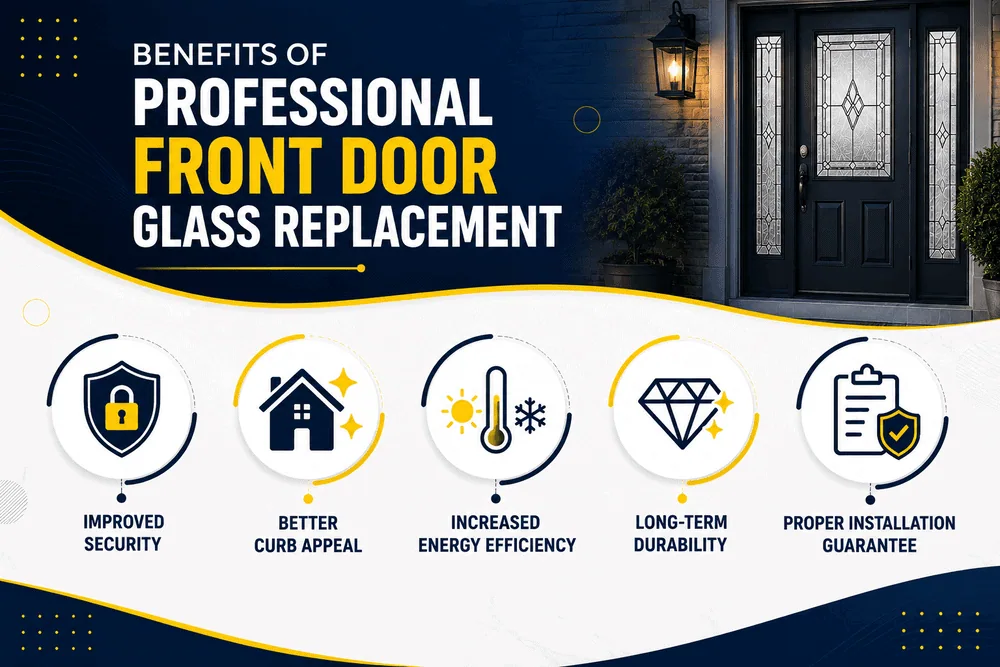
Benefits of Replacing an Older Front Window
Improved Energy Efficiency
Modern glazing and sealing technology significantly reduce heat loss compared to older single- or early double-pane windows.
Better Home Security
New windows come with stronger locking mechanisms and more durable frames than older, worn hardware.
Reduced Outside Noise
Double- and triple-pane glass, along with laminated options, can noticeably cut down on street noise — a common concern for front-facing windows.
Enhanced Curb Appeal
A front window is one of the most visible architectural features of a home, and a fresh, well-fitted replacement can make an immediate visual difference.
Increased Property Value
Updated windows are consistently cited by real estate professionals as a renovation that helps recoup a meaningful portion of its cost at resale.
Lower Maintenance Requirements
Newer materials, especially vinyl and fiberglass, require far less upkeep than aging wood frames.
What Professionals Look For During a Front Window Assessment
Before quoting a repair or a full replacement, an experienced installer doesn’t just look at the visible crack or the foggy pane — they check the whole opening. This assessment is what separates an accurate quote from a guess, and it’s usually where a homeowner finds out whether the problem is cosmetic or structural.
Frame Condition
The installer checks for warping, soft or spongy spots, gaps between the frame and the wall, and whether the frame is still square. A frame that’s shifted out of square often points to a bigger underlying issue than the window itself.
Seal Failure
Fogging or condensation trapped between panes means the insulated glass unit’s seal has broken down and the gas fill has escaped. This is a glass-level issue, but a technician will still check whether it’s isolated or a sign the whole unit is failing.
Moisture Intrusion
Staining, discolouration, or a musty smell around the sill and the wall below the window can indicate water has been getting in for a while, sometimes long before it became visible. This is one of the most important things a professional checks, because it directly affects whether glass-only repair is still a safe option.
Energy Efficiency
An assessment usually includes checking for drafts, feeling for temperature differences near the frame, and comparing the current glazing against what a modern, code-compliant window would offer.
Structural Concerns
On older homes especially, installers check whether the rough opening is still structurally sound, whether masonry around the window has shifted, and whether any repair work will be needed before a new window can be properly fitted.
This kind of hands-on assessment is why a written, in-person quote is always more reliable than an online cost estimate — every home carries its own combination of these factors.
DIY vs Professional Front Window Replacement
Some window-related tasks are genuinely manageable on your own — recaulking a gap, replacing a worn wiper seal, or swapping out hardware. Full front window replacement is a different level of work, and it’s worth understanding why before deciding to take it on yourself.
Where DIY can work: Minor maintenance tasks, such as resealing small gaps or replacing weatherstripping, don’t usually require special tools or training.
Where professional installation matters more: Getting the exact measurements right, achieving a proper air and water seal around the frame, and meeting local safety glazing codes (particularly for tempered or laminated glass near doors and low sill heights) all require experience most homeowners don’t have on hand. A slightly imperfect seal isn’t always obvious right away — it tends to show up later as a draft, a leak, or a mould issue behind the wall.
Warranty and insurance considerations: Many manufacturer warranties require professional installation to remain valid, and a poorly sealed DIY installation can sometimes complicate an insurance claim down the line if water damage occurs.
For a glass-only repair on a sound frame, some experienced DIYers manage it successfully. For anything involving the frame, structure, or a full-frame tear-out, professional installation is generally the safer and more cost-effective route once you account for the risk of redoing the work later.
How Long Does It Take to Replace a Front Window?
Same-Day Replacement
A standard retrofit — installing a new window into an existing, sound opening — typically takes one to three hours per window and is usually completed in a single visit.
Full-Frame Replacement Timelines
Full-frame replacement takes longer, since it involves removing the old frame down to the studs, addressing any rot or structural repairs, insulating, and finishing the trim. This can take half a day to a full day per window, particularly on older homes.
Custom Order Timelines
If the window is a non-standard size, shape, or has a specific glass package, it usually needs to be manufactured to order before installation can happen. Lead times for custom windows commonly run two to six weeks, so it’s worth factoring this into your renovation schedule well ahead of time.
What Happens During a Front Window Replacement?
Initial Inspection
A technician assesses the current frame, glass, and surrounding structure to confirm whether a retrofit or full-frame replacement is needed.
Measuring and Ordering
Precise measurements are taken to ensure the new window is manufactured to fit the exact opening.
Removing the Existing Window
The old window and, if applicable, the surrounding frame and trim are carefully removed.
Installing the New Window
The new unit is set into place, leveled, and secured according to manufacturer specifications.
Sealing and Insulating
Gaps around the frame are insulated and sealed to prevent drafts and moisture intrusion.
Final Inspection and Cleanup
The finished installation is checked for proper operation and a tight seal, and the work area is cleaned up before the crew leaves.
How Long Do Front Windows Typically Last?
Lifespan of Vinyl Windows
Generally 20–30 years with proper installation and minimal maintenance.
Lifespan of Wood Windows
Can last several decades with diligent upkeep, though painting and sealing are needed regularly.
Lifespan of Aluminum Windows
Typically 20–25 years, though performance can decline sooner in extreme climates.
Lifespan of Fiberglass Windows
Often 30–40+ years, among the longest-lasting frame materials available.
Signs a Window Is Near the End of Its Lifespan
Persistent drafts, visible seal failure, difficulty operating the window, and rising energy bills despite no other changes are all indicators that replacement is approaching.
Does Home Insurance Cover Front Window Replacement?
Damage Usually Covered by Insurance
Most standard home insurance policies cover front window damage caused by sudden, accidental events such as storms, break-ins, falling branches, or vandalism.
Damage Often Excluded from Coverage
Gradual wear and tear, age-related seal failure, and general deterioration are typically not covered, since insurance is designed for sudden and accidental loss rather than routine maintenance.
How to File a Window Damage Claim
Document the damage with photos, contact your insurance provider promptly, and get a written quote from a licensed glass or window company to support your claim.
When Paying Out of Pocket Makes More Sense
If the damage is minor and below your deductible, or if it stems from normal aging rather than a covered event, paying out of pocket is usually more practical than filing a claim. For general guidance on what home insurance typically does and doesn’t cover, the Insurance Bureau of Canada is a useful independent resource.
What Homeowners Should Know About Full Window Replacement Projects
Replacing a single front window is often the starting point, but many homeowners eventually consider upgrading multiple windows at once. Doing so tends to be more cost-effective on a per-window basis, since labour and material delivery are consolidated into a single project. It also means consistent energy performance across the whole home rather than one upgraded window surrounded by older, less efficient ones.
Whole-home window upgrades are especially common during broader renovations, and many homeowners undertaking a full window replacement in the GTA choose to pair the project with other energy-efficiency improvements, such as updated insulation or weatherstripping, to maximize long-term savings. Over time, the combination of lower energy bills, reduced maintenance, and improved comfort tends to make whole-home projects a strong long-term value, even though the upfront cost is naturally higher than replacing a single window.
Cost-Saving Tips for Front Window Replacement
Compare Multiple Quotes
Get at least three written estimates to understand the realistic price range for your specific project.
Replace Multiple Windows Together
Bundling windows into one project often reduces the per-window labour cost.
Explore Energy-Efficiency Rebates
Provincial and utility-run rebate programs periodically offer incentives for ENERGY STAR-certified replacements — it’s worth checking current programs in your region before finalizing a quote.
Schedule Installation During Slower Seasons
Many installers offer better pricing during the fall and winter off-season compared to peak spring and summer demand.
Choose Materials That Match Your Budget
Vinyl offers strong value for most homeowners, while premium materials like fiberglass or wood make more sense for specific style or performance goals.
How to Get an Accurate Window Replacement Quote
Gather Measurements
Having rough dimensions on hand helps installers give a more accurate initial estimate.
Understand Glass Options
Know whether you want double- or triple-pane, Low-E coatings, or additional features like tempered or laminated glass before requesting quotes, so you’re comparing like-for-like pricing.
Ask About Warranties
Confirm what’s covered — the glass unit, the frame, and the labour — and for how long.
Verify Installer Experience
Ask about licensing, insurance, and experience with your specific window type and home age.
Review What Is Included in the Quote
Confirm whether removal, disposal, trim work, and cleanup are included, or billed as extras.
Common Mistakes Homeowners Make When Replacing Windows
Choosing Based on Price Alone
The cheapest quote isn’t always the best value, particularly if it skips proper insulation or uses lower-grade materials.
Ignoring Energy Ratings
Skipping ENERGY STAR certification can mean missing out on both rebates and long-term energy savings.
Delaying Replacement Too Long
Waiting until a window fails completely can lead to secondary damage, such as rot or water intrusion, that increases the final cost.
Not Comparing Multiple Estimates
Relying on a single quote makes it hard to know if the price and scope of work are reasonable.
Overlooking Warranty Details
Not all warranties are equal — some cover only the glass, others the full installation, so it’s worth reading the fine print.
Conclusion
So, how much does it cost to replace a front window? For most Canadian homeowners, the realistic answer falls between $600 and $1,500 installed, with the final number shaped by window size, glass type, frame material, and how complex the installation turns out to be. A basic vinyl retrofit will always cost less than a large custom picture or bay window with triple-pane glass.
Every home and every window is a little different, which is why getting a proper on-site assessment matters more than relying on a single average figure. Whether you’re dealing with a cracked pane, persistent drafts, or simply planning ahead for a home upgrade, understanding these cost drivers puts you in a better position to budget accurately and ask the right questions when comparing quotes.
Frequently Asked Questions (FAQs)
How much does it cost to replace a front window in Canada?
Most homeowners pay between $600 and $1,500 installed for a standard front window, though costs can range from around $400 for a small basic retrofit to $4,000 or more for large, custom, or premium triple-pane installations.
Is it cheaper to replace the glass or the entire window?
Glass-only replacement is generally cheaper, typically ranging from $200 to $600, and makes sense when the frame is still in good condition. Full window replacement costs more but is necessary when the frame is damaged, warped, or draft-prone.
How long does front window replacement take?
A single window replacement usually takes a few hours to complete for a standard retrofit installation. Full-frame replacements or larger custom windows can take longer, particularly if structural repairs are needed around the opening.
Can a cracked front window be repaired instead of replaced?
In many cases, yes. If the crack is limited to the glass and the frame is structurally sound, a glass-only repair is often sufficient rather than replacing the entire window.
What type of front window is the most affordable to replace?
Standard single-hung or double-hung vinyl windows are generally the most affordable option, particularly when installed as a retrofit into an existing, well-maintained frame.
Does homeowners insurance cover broken front windows?
It depends on the cause. Sudden, accidental damage from events like storms or break-ins is typically covered, while gradual wear, age-related seal failure, or general deterioration is usually excluded.
How much does double-pane window replacement cost?
Double-pane glass is the standard baseline for most window replacements in Canada, generally falling within the typical $600 to $1,500 installed range for a standard-sized front window, depending on frame material and installation complexity.
When should a window be replaced instead of repaired?
Replacement is usually the better choice when the frame is more than 20–25 years old, shows signs of rot or warping, or when repairs would need to be repeated frequently. In these cases, the long-term cost of ongoing repairs often exceeds the cost of a single replacement.
Can you replace a front window yourself?
It depends on the scope of the job. Minor maintenance, like resealing gaps or swapping weatherstripping, is manageable for many homeowners. Replacing the glass or the entire window is more demanding, since it requires exact measurements, a proper air and water seal, and often compliance with local safety glazing codes — mistakes here can lead to drafts, leaks, or voided warranties, so professional installation is generally recommended.
Does replacing windows increase home value?
Updated windows are commonly cited by real estate professionals as one of the renovations that helps recoup a meaningful portion of its cost at resale, largely because they improve energy efficiency, curb appeal, and buyer confidence that a major system in the home doesn’t need immediate attention.
What is the lifespan of a double-pane window?
A well-installed double-pane window typically lasts 20 to 30 years, though the sealed unit itself — the insulated glass between the panes — often has a shorter warranty period, commonly 10 to 20 years, since that’s usually the first component to fail.
Can I replace window glass without replacing the frame?
Yes, as long as the frame is structurally sound with no rot, warping, or persistent air and water leaks. This is a common and more affordable fix for a cracked pane or a fogged seal, provided the surrounding frame doesn’t have underlying damage.
What is the difference between retrofit and full-frame replacement?
A retrofit installs a new window into the existing frame and opening, which is faster and generally more affordable. Full-frame replacement removes the old window and frame down to the studs, allowing for new insulation and a tighter seal, which costs more but is often necessary for older or damaged openings.
Need Guidance on Window Glass Replacement?
Cost estimates are a useful starting point, but every window tells a slightly different story once someone actually looks at the frame, the seal, and the surrounding wall. If you’re unsure whether your front window needs a glass-only repair or a full window replacement, an in-person assessment is the most reliable way to know for sure. Tanic Glass works with homeowners across the Greater Toronto Area on exactly this kind of evaluation, and general information is available for anyone weighing their options.