Your front door is the first thing people see when they pull up to your home, and the glass in it plays a bigger role than most homeowners realize. It lets in natural light, adds character to your entryway, and yes, it also contributes to your home’s security and energy performance. So when that glass cracks, fogs up, or just starts looking dated, the question becomes: now what?
The good news is that changing glass in a front door is one of those repairs that, when handled correctly, delivers a noticeable improvement in both appearance and function. This guide walks you through everything: from knowing when replacement is actually necessary, to understanding what type of glass works best, and why getting a professional involved is almost always worth it.
What Is Involved in Changing Glass in a Front Door?
Changing glass in a front door typically involves removing the damaged or outdated glass panel, taking precise measurements, installing a new tempered or insulated glass unit, and properly sealing the opening to prevent air and moisture infiltration. In many cases, homeowners can replace the glass without replacing the entire door, making it a cost-effective way to improve appearance, security, and energy efficiency.
Why Homeowners Consider Changing Glass in a Front Door
Most people don’t wake up thinking about their front door glass until something goes wrong. And when it does, the reasons usually fall into a handful of predictable categories.
Cracked or Broken Glass
This one’s obvious, but it’s worth addressing because the timeline matters. A crack, even a small one, compromises the structural integrity of the pane. What starts as a hairline fracture from a stray baseball or a temperature shift can spread within weeks, especially through Canadian winters. And if the glass is in a door with a frame under constant use, that vibration from opening and closing accelerates the damage.
Cracked front door glass also creates a security vulnerability. It’s a visible signal to anyone walking by that the entry point is weakened. Replacing it quickly isn’t just about aesthetics. It’s about protecting your home.
Foggy or Cloudy Double-Pane Glass
If you have insulated glass (double or triple-pane) in your front door and you’re noticing a persistent foggy or hazy appearance between the panes, the seal has failed. This is called seal failure or insulated glass unit (IGU) failure, and it happens when moisture infiltrates the space between the two glass layers.
No amount of cleaning fixes this. The fogging is on the inside. The only solution is replacing the glass unit entirely. The upside? You don’t necessarily need a new door, just a new glass insert.
Outdated Door Design
A lot of homes in Ontario have entry doors installed a decade or two ago, and the decorative glass styles from that era. Think small beveled inserts or plain clear panels. These just don’t hold up visually against modern door designs. Replacing the glass with something more contemporary, like a clean frosted panel or a custom decorative insert, can completely transform the look of an entryway without the cost of a full door replacement.
Energy Efficiency Concerns
Older single-pane glass in a front door does almost nothing for insulation. You might notice cold drafts near the door in winter, or feel heat radiating through it in summer. Upgrading to energy-efficient insulated glass through a professional insulated glass replacement service can make a real difference in comfort and heating costs, and it’s one of the most practical reasons homeowners look into front door glass replacement.
Can You Replace the Glass Without Replacing the Entire Front Door?
This is one of the most common questions people search for when dealing with door glass damage, and the answer is: often yes, but it depends on a few things.
Most modern entry doors are designed with removable glass inserts. The glass sits within a frame or cassette that can be taken out and replaced without touching the door slab itself. If your door falls into this category, front door glass replacement is straightforward and significantly more affordable than a full door swap.
Where it gets complicated:
- Older doors with fixed glass: Some doors, particularly older wood doors, have glass that was set in place during manufacturing with no easy removal method. In these cases, replacement is possible but more labour-intensive.
- Structural damage to the door frame: If the crack or impact that damaged the glass also damaged the surrounding door frame or cassette, a full replacement may be more cost-effective.
- Custom or discontinued glass sizes: If the glass panel in your door is a non-standard size or the door style has been discontinued, sourcing a matching insert may take extra lead time.
A professional assessment is the fastest way to know which category your door falls into. The evaluation is quick and gives you a clear picture of your options before any money is spent.
Signs Your Front Door Glass Needs Replacement
It’s not always as dramatic as a shattered pane. Here are the more subtle signs that replacement is overdue:
- Visible cracks or chips: Even minor damage should be evaluated. Chips near the edge of the glass are particularly prone to spreading.
- Condensation between panes: As mentioned above, this is a sign of seal failure. Once moisture enters the IGU, the fogging won’t clear on its own.
- Drafts near the door glass: If you can feel cold air around the glass when standing indoors, the seal between the glass and the door frame has deteriorated.
- Loose or rattling glass: Glass that moves noticeably when you open or close the door is no longer properly seated. This creates both a noise issue and a security risk.
- Reduced clarity or discolouration: Some older glass types develop a slight tint or cloudiness over time that affects both appearance and light transmission.
- After a break-in attempt: Even if the glass wasn’t fully broken, stress fractures from impact attempts can compromise the pane enough to warrant replacement.
How the Process of Changing Glass in a Front Door Works
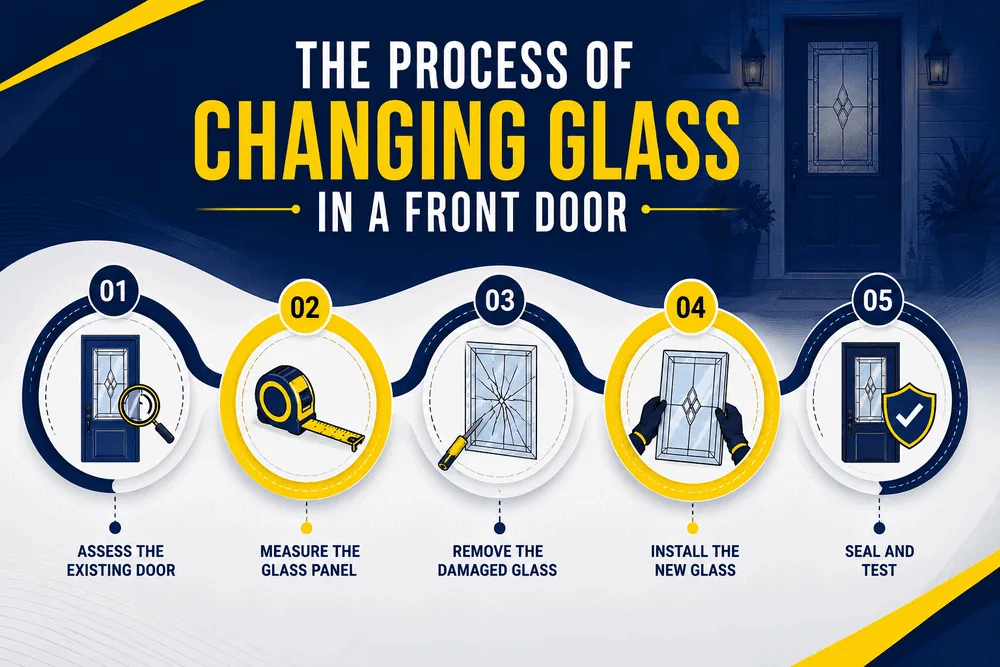
Understanding the process helps set expectations and also helps you ask the right questions when speaking with a professional.
Inspecting the Existing Door
Before anything is removed, a qualified technician will assess the door itself. This includes checking the frame for damage, examining how the current glass is mounted, and confirming the exact dimensions of the glass insert. This step determines whether the job is a straightforward glass swap or whether additional work is needed.
Measuring the Glass Panel
Precision matters here. Glass is cut to fit specific dimensions, and even a few millimetres off means the new pane won’t seat correctly. Professionals take exact measurements of the opening, accounting for any bead or moulding that holds the glass in place, to ensure the replacement glass fits perfectly.
Removing the Damaged Glass
Depending on how the glass is held in the door, removal might involve carefully prying away wooden or vinyl beading, unscrewing a frame cassette, or working with a glazing compound that’s been in place for years. safety is the priority here. Glass removal without the right tools and experience is one of the more common sources of injury in DIY repair attempts.
Installing the New Glass
The new glass unit is positioned in the opening, checked for alignment, and secured. For insulated glass units, proper seating is critical to maintaining the thermal seal. For decorative glass, the orientation matters too. Many patterns are designed to read in a specific direction.
Sealing and Testing
Once installed, the glass is sealed along all edges to prevent air and moisture infiltration. The door is then tested for proper operation, including opening and closing smoothly, no rattling, no gaps in the seal. A well-installed glass unit should last for many years without any issues.
Types of Glass Available for Front Doors
Choosing the right glass is about balancing light, privacy, aesthetics, and energy performance. Here’s a breakdown of the main options:
Clear Glass
The straightforward choice. Clear glass maximizes light transmission and gives an unobstructed view in both directions. It works well in low-traffic areas or when combined with decorative sidelights that provide visual interest without compromising the clean look of the main panel.
Frosted Glass
Frosted glass diffuses light while obscuring the view into and out of the home. It’s a popular choice for front doors because it lets in natural light during the day without giving passersby a clear line of sight into your entryway. It’s also easier to keep clean than textured decorative glass.
Decorative Glass
This category covers everything from simple obscure textures to full custom designs with colours, bevels, and patterns. Decorative glass is often the choice when a homeowner wants the door to be a design feature in itself. It adds curb appeal and can significantly increase the visual value of the home’s exterior.
Tempered Glass
Tempered glass is manufactured through a controlled heating and rapid cooling process that makes it significantly stronger than standard glass. Critically, when tempered glass breaks, it shatters into small rounded pieces rather than sharp shards. Many building codes require tempered glass in entry doors, and for good reason. It’s a safety upgrade worth making even when it’s not legally required.
Energy-Efficient Insulated Glass
Insulated glass units (IGUs) consist of two or three glass panes with a sealed air or gas-filled space between them. The insulating layer dramatically reduces heat transfer, keeping your home warmer in winter and cooler in summer. For anyone dealing with drafts around their current front door glass, upgrading to a low-E insulated unit is one of the most impactful changes they can make.
Front Door Glass Replacement Considerations for Canadian Homes
Canadian weather can be demanding on entry doors, especially during winter months when temperatures fluctuate significantly. Homeowners should consider energy-efficient glass options that help reduce heat loss and improve indoor comfort.
Low-E insulated glass units are often recommended because they improve thermal performance while allowing natural light into the home. Additionally, front door glass must meet applicable safety standards, which typically require tempered or laminated safety glass for entry door applications.
Choosing the right glass for Canadian conditions can improve energy efficiency, reduce drafts, and help maintain year-round comfort.
How Much Does Changing Glass in a Front Door Cost?
The cost of front door glass replacement varies depending on several factors. While replacing the glass is often more affordable than replacing the entire door, pricing depends on the size, glass type, design complexity, labour requirements, and urgency of the project.
- Glass size: Larger panels require more material and more precise handling during installation.
- Glass type: Standard clear or frosted glass will cost less than custom decorative glass or specialty insulated units with low-E coatings.
- Decorative complexity: Custom beveled or coloured glass designs require skilled fabrication and, in some cases, longer lead times.
- Labour requirements: Doors where the glass is easily accessible and removable cost less to work on than older doors where removal involves more effort.
- Urgency: Emergency glass replacement services for broken glass that needs to be addressed the same day for security reasons and may carry a premium over standard scheduled appointments.
Getting a quote directly from a glass replacement specialist is the most accurate way to understand what your specific situation will cost. Most companies will assess the door and provide a clear estimate before any work begins.
DIY vs. Professional Front Door Glass Replacement
It’s worth addressing this directly because many homeowners do consider attempting this themselves, particularly when they’re looking at what appears to be a simple glass swap.
| Factor | DIY | Professional |
| Safety | Higher risk of injury during glass handling | Proper tools and training significantly reduce risk |
| Measurement accuracy | Easy to get wrong | Precise measurements every time |
| Warranty on installation | None | Often available |
| Installation quality | Inconsistent | Consistent and code-compliant |
| Time | Several hours including research | Efficient, predictable |
| Risk of damaging the door | Present | Minimal |
The honest assessment: for a standard flat glass panel in a modern door with a removable cassette, a confident and careful DIYer can manage a replacement. But the moment decorative glass, insulated units, older door construction, or custom sizing enters the picture, the margin for error shrinks considerably. A failed seal on an insulated unit means the fogging problem comes back. An imprecise cut means the glass doesn’t fit and needs to be reordered. Getting it wrong costs more than getting it right the first time.
Common Mistakes to Avoid When Replacing Front Door Glass
Whether you’re managing the project yourself or just want to be an informed customer, these are the mistakes that tend to cost homeowners the most:
- Incorrect measurements: Glass is cut to size and can’t be adjusted on site. Even a small measurement error means the piece won’t fit and needs to be remade.
- Choosing the wrong glass type: Selecting standard glass for an application that requires tempered glass (which is often code-mandated for entry doors) creates both a safety and a compliance issue.
- Poor sealing: Glass that isn’t properly sealed around all edges will allow moisture and air infiltration. This leads to condensation issues and drafts down the road.
- Ignoring building code requirements: In Canada, residential building codes specify glass safety standards for entry doors. Tempered or laminated safety glass is typically required. Using non-compliant glass creates potential liability.
Attempting complex decorative glass replacement without expertise: Decorative glass panels, particularly older leaded or beveled designs, require specialized handling. Attempting to replace these without experience in working with decorative glass often results in damage to the frame or surrounding elements.
Benefits of Professional Front Door Glass Replacement
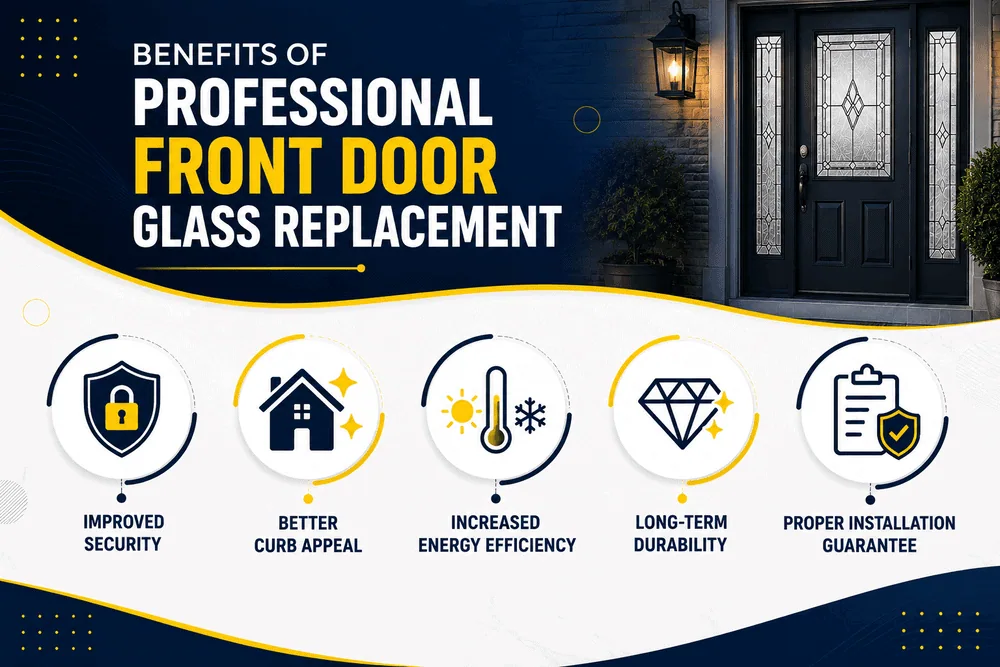
Beyond avoiding the mistakes above, there are positive reasons to work with a professional glass service:
- Improved security: Modern tempered glass, properly installed, is significantly harder to breach than older single-pane glass.
- Better curb appeal: A clean, properly fitted glass panel or an upgraded decorative insert noticeably improves the appearance of the entire entryway.
- Increased energy efficiency: Energy-rated insulated glass units reduce heat loss and can contribute to lower heating and cooling costs.
- Long-term durability: Professionally installed glass with quality sealing will last for years without developing the seal failures and drafts that come with poor installation.
- Proper installation guarantee: Reputable glass companies stand behind their work. If something goes wrong with the installation, you have recourse.
Why Choose Tanic for Front Door Glass Replacement
Tanic has been helping homeowners across the area with glass replacement and repair for years, and front door glass is one of the most common jobs we handle. Here’s what that means for you as a customer:
- Experienced technicians: The people doing the work know doors, know glass, and know how to handle both without creating new problems.
- Quality materials: We source glass that meets current safety codes and energy standards. No shortcuts.
- Custom door glass replacement solutions: If you’re looking for something specific, like a custom decorative panel, a particular frosted texture, or a specific insulated unit. We can source it and install it correctly.
- Residential and commercial expertise: Whether it’s a single-family home in the suburbs or a commercial entrance, we handle glass replacement across property types.
- Service area coverage: We serve homeowners throughout the region. If you’re not sure whether we cover your area, reach out and we’ll let you know quickly.